

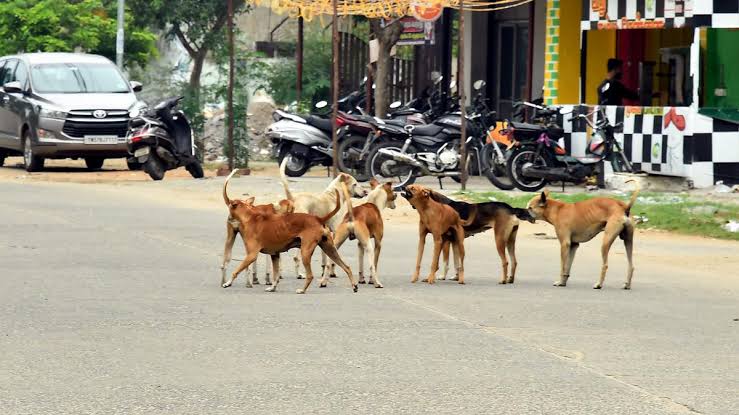
Rising Stray Dog Population in Pimpri Chinchwad Sparks Safety Concern
Special Correspondent
Pune: The increasing presence of stray dogs in several areas of Pimpri Chinchwad, including Nigdi Pradhikaran and Akurdi, has led to growing concerns among local residents about their safety. Complaints regarding the threat posed by these dogs have been flooding the Pimpri Chinchwad Municipal Corporation (PCMC), prompting calls for action. While the PCMC has responded by highlighting their sterilization efforts, residents are demanding more effective solutions.
Localities such as Mohannagar, Kalbhor Nagar, Chinchwad Station, Ramnagar, Mahatma Phule Nagar, Dattanagar, Shankar Nagar, Vidyanagar, Parshuram, Anandnagar, and Indira Nagar have all witnessed a surge in the stray dog population, especially affecting children and senior citizens. Many residents are now living in constant fear, with reports of packs of stray dogs chasing children on their way to school.
Ashwini Adone, a resident of Mahatma Phule Nagar, shared her concerns, stating, “It’s become risky to send children to school alone because packs of stray dogs often chase them. Some children are so frightened that they refuse to go to school.”
Stray dogs are often seen roaming in packs around residential areas, main roads, vegetable markets, and meat shops, creating an intimidating atmosphere. Instances of dogs attacking pedestrians, chasing vehicles, and even biting individuals are increasingly common, particularly at night. There is also an alarming rise in the number of rabid dogs in the area, which has further heightened fears among residents.
At night, the continuous barking of stray dogs disrupts the peace, making it difficult for families to sleep. The situation is especially perilous for workers who commute late at night, as dogs often chase their vehicles, occasionally attempting to bite them. As a result, many drivers are forced to speed up to escape, raising the risk of accidents. Given the rising number of incidents, residents fear a serious accident may occur if no immediate action is taken.
Maruti Bhapkar, a social activist, emphasized the urgency of addressing the issue: “The growing stray dog menace in the city requires immediate attention. These dogs pose a serious rabies risk and their aggressive behavior has instilled fear in children. If a fatality or serious accident occurs due to this negligence, the PCMC will be held fully responsible.”
Unconventional Beliefs and Practices
In an attempt to keep stray dogs at bay, many residents in Pimpri Chinchwad have adopted an unusual practice. They tie bottles filled with water and mixed with red vermillion outside their homes, believing it will deter the dogs. However, there is no scientific evidence to support this belief, yet the practice continues as a precaution against potential attacks.
Sterilization Efforts and Challenges
The PCMC has been conducting a sterilization campaign to control the stray dog population, following the guidelines set by the central government. The program, which began in 2011, involves capturing stray dogs, sterilizing them, and then releasing them back into their original habitats. According to Sandeep Khot, Deputy Commissioner of the Veterinary Department at PCMC, “Legally, capturing and killing dogs is prohibited. Therefore, we sterilize the dogs and keep them under observation for four days before releasing them.”
In 2024 alone, 7,300 sterilization surgeries were performed, with each surgery costing approximately Rs. 999, totaling an expenditure of Rs. 83,01,600. Despite these efforts, the rapid increase in the stray dog population has outpaced the available resources, and many residents feel the measures are insufficient.
In 2024, there were 94 reported cases of children and 358 adults being bitten by stray dogs in Pimpri Chinchwad. The municipal corporation is continuing its efforts to curb the problem, but the growing population of stray dogs, coupled with the challenges in implementing sterilization programs, remains a serious concern for residents.
The PCMC is urged to consider more effective and immediate solutions to address the safety and health risks posed by stray dogs, and to alleviate the growing anxiety of residents in these affected areas.