
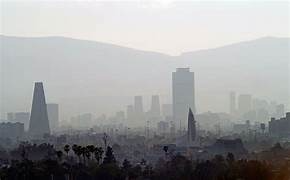
Pune: City has experienced deteriorating air quality over the past three months, with residents exposed to unsafe pollution levels on nearly two-thirds of the days. According to an analysis conducted by the Centre for Research on Energy and Clean Air (CREA), based on data from the Central Pollution Control Board (CPCB), Punekars faced polluted air on 57 out of 89 days between February and April 2025.
The analysis shows that the entire month of February saw unhealthy air, with PM10 levels averaging 127 µg/m³—well above the National Ambient Air Quality Standards (NAAQS) safe daily threshold of 100 µg/m³. March was only marginally better, recording an average PM10 concentration of 112 µg/m³.
CREA analyst Manoj Kumar highlighted the health risks associated with such pollution levels, pointing out that long-term exposure to PM10 can increase the likelihood of respiratory and cardiovascular diseases. He also noted that air quality in April 2025 was worse than the same period in 2024, both in PM10 and PM2.5 levels. “Prolonged exposure to PM2.5 is even more dangerous, as it’s linked to serious conditions like heart disease, decreased lung function, and lung cancer. This trend reflects the deepening and persistent nature of Pune’s air pollution problem,” he said.
Environmental groups continue to raise concerns. Dushyant Bhatia, a member of the Pune Air Action Hub, acknowledged ongoing engagement with local authorities on issues such as traffic, waste management, and emissions from crematoria. However, he emphasized the need for stronger, community-based and evidence-backed measures. “Despite having an air quality action plan in place for over two years, we are still falling short of meeting national standards. Instead of relying on superficial fixes like fog cannons or mist fountains, the focus should be on sustainable urban solutions—such as improving public transport and pedestrian infrastructure,” Bhatia said.
The city’s major sources of PM2.5 include biomass burning and vehicle emissions, while PM10 primarily originates from road dust and construction work. Despite an investment of over ₹222 crore under the National Clean Air Programme (NCAP), annual PM10 levels have consistently failed to meet NAAQS guidelines. Kumar stressed the need to reassess current air quality strategies, stating, “There needs to be greater accountability and better implementation of local-level action plans to effectively reduce pollution at its source.”
This continuing air quality crisis highlights the urgent need for targeted, scientifically sound interventions that prioritize public health and environmental sustainability.