

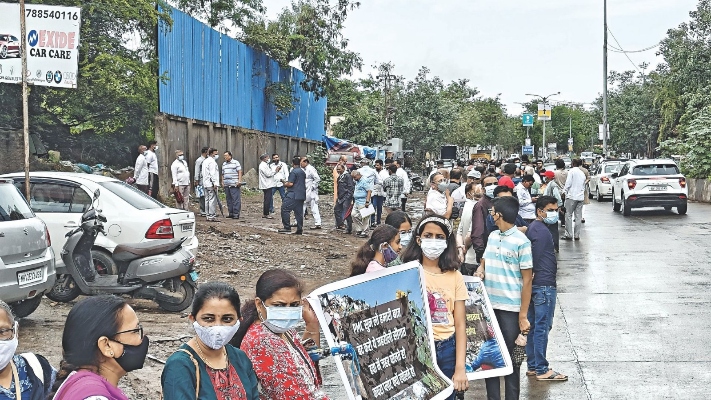
Pune: Over 500 residents from Sus and Baner took to the streets on Sunday, forming a human chain to voice their opposition against a garbage processing facility located at Survey No. 48 on Sus Road. Despite heavy rainfall, the protest saw participation from people of all age groups, including senior citizens, women, and children. The main concern raised by the community is the persistent foul smell originating from the plant, which they say is severely affecting their quality of life.
The waste management facility, operational since 2016 and spread across nearly 1,500 square metres, has been a source of repeated complaints due to its location and functioning. Although top government officials had previously instructed the Pune Municipal Corporation (PMC) to shut down or relocate the unit citing health risks and public discomfort, those directives have not been implemented. Instead, PMC has continued operating the plant, drawing criticism for its inaction.
Local residents allege systemic negligence from both the PMC and pollution control authorities. Repeated complaints filed with the Maharashtra Pollution Control Board (MPCB) have yielded little to no response. Meanwhile, concerns over unscientific waste processing practices continue to grow.
The plant receives organic waste from across Pune, much of which starts degrading before reaching the facility, creating a severe stench during handling. The garbage is stored in open spaces behind the facility, further intensifying the odour. Additionally, there are reports of the plant’s drainage system being linked with residential lines, resulting in occasional leakage of contaminated water onto nearby roads.
Environmental and health risks are mounting. The plant is said to emit toxic gases, contributing to air pollution and potential contamination of local groundwater sources. The area has also become a hotspot for disease-carrying pests such as flies and mosquitoes. Compounding the issue is the constant traffic from garbage trucks and tankers, which has disrupted the peace of the neighbourhood.
Residents also highlight the geographical disadvantage of the plant’s location—built on a slope with high wind activity, which causes the unpleasant smell to spread across a wide radius. Previous attempts to mitigate these issues using recommendations from national environmental bodies have reportedly failed, as the core problem lies in the plant’s unsuitable location.
The protest underscores the urgent need for the civic authorities to reconsider the plant’s operations and prioritize public health and environmental safety.