
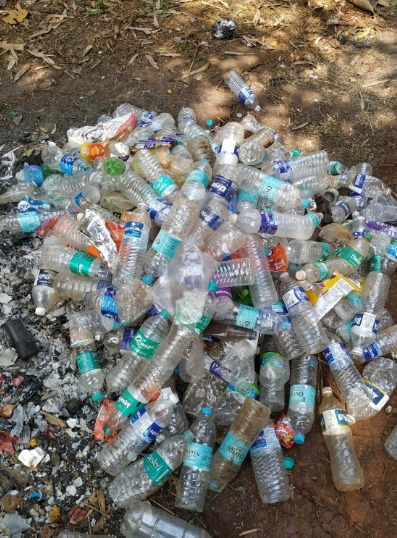
Pune: A routine cleanup drive at Pune’s iconic Vetal Tekdi turned into a stark wake-up call after volunteers unearthed disturbing amounts of garbage, including biohazardous and offensive waste such as used syringes, condoms, liquor bottles, and household trash.
The initiative was led by Pune Ploggers, a community-driven non-profit organization that combines jogging with litter-picking to promote environmental stewardship. What began as a regular plogging event quickly escalated into a serious concern when participants encountered unhygienic and dangerous waste materials scattered across the hill’s natural terrain.
“Forests are not dumping grounds. Nature’s worth is beyond measure. We all need to act responsibly and inspire others to do the same,” Pune Ploggers stated after the drive.
The Pune Municipal Corporation (PMC) has since taken note of the issue, registering the group’s complaint and pledging stronger action against littering. Officials also promised to enhance monitoring efforts at the site, including exploring new surveillance measures.
The incident has reignited longstanding concerns over the degradation and encroachment of Pune’s green belts—including Mahatma Tekdi, Baner, Sus, Aundh, and Pashan—areas often at the heart of ecological debates. The controversial Bal Bharati-Paud Phata road project, which proposes to cut through Vetal Tekdi, remains a particularly contentious issue among environmentalists and local residents.
Growing public safety issues have compounded the problem. Incidents involving drug use, theft, and sexual assault have been increasingly reported in these secluded natural zones. A recent case at Bopdev Ghat has fueled public demand for enhanced patrolling and the installation of CCTV cameras to ensure the safety of visitors.
The issue isn’t isolated to Vetal Tekdi. Similar conditions were reported at Lohegaon Hill, where ploggers found trash, alcohol containers, and used condoms, highlighting a city-wide neglect of natural reserves.
According to PMC data, between January and December 2024, over ₹7.6 lakh in fines were collected from 561 offenders for burning waste. Another 189 individuals were fined ₹78,068 for littering and improper disposal of garbage.
Forest department officials cited chronic staff shortages as a significant challenge in ensuring constant supervision of these areas. Authorities are now exploring structural solutions such as building boundary walls around sensitive forested locations to prevent illegal dumping and safeguard local flora and fauna.
As urban sprawl continues to expand across Pune, environmental advocates, citizens, and civic bodies are rallying for long-term, sustainable conservation strategies to protect the city’s remaining green spaces. These efforts aim not only to maintain ecological balance but also to preserve Pune’s natural and cultural heritage for future generations.